
Materials science joins ESI Global Top 1%
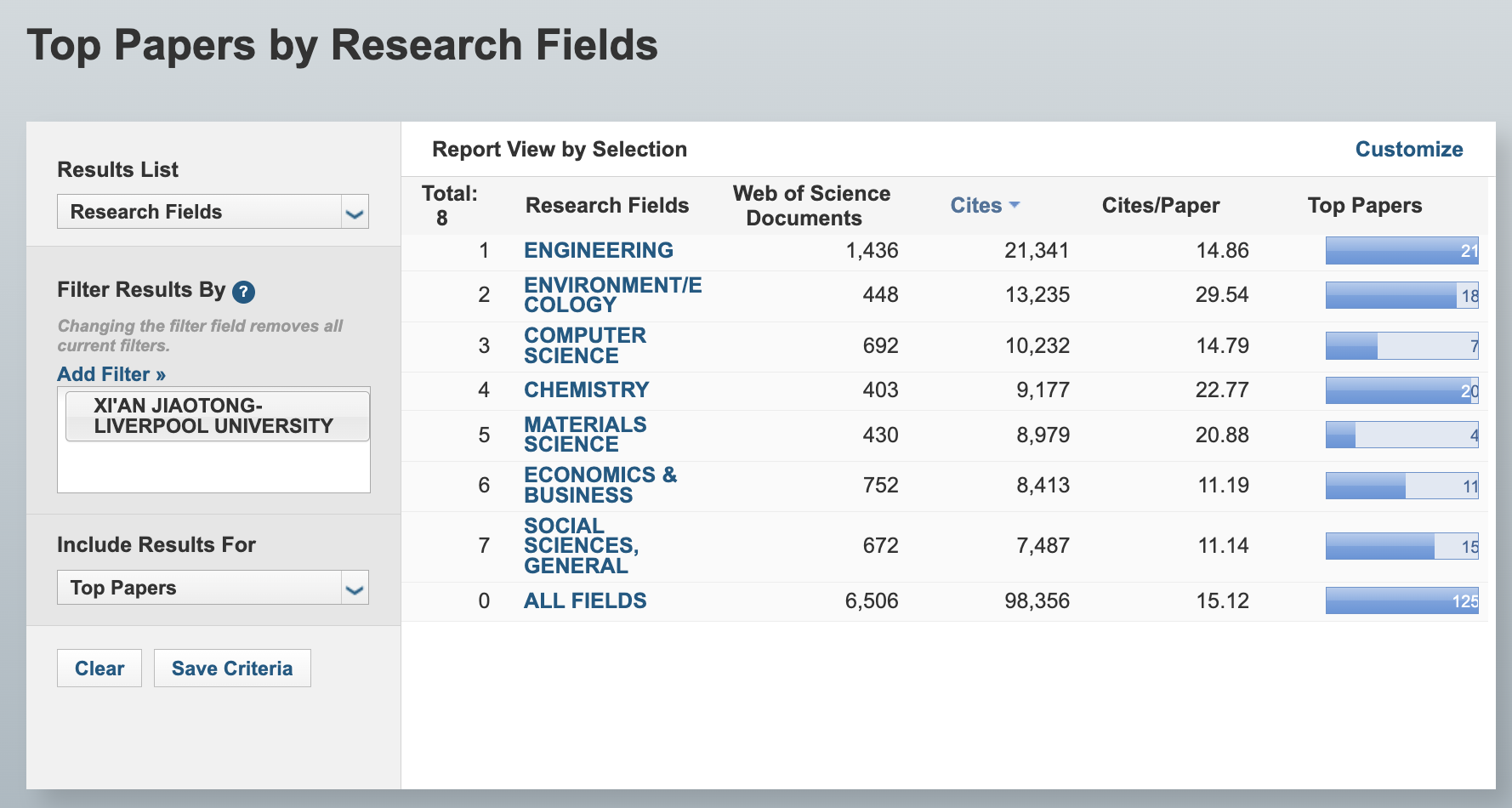
According to the latest Essential Science Indicators (ESI) update on 8 January 2026, Xi’an Jiaotong-Liverpool University’s (XJTLU) research in the field of materials science has entered the ESI Global Top 1% for the first time.
This marks the second major milestone for XJTLU’s research impact in a short period. In November 2025, the University’s research in chemistry was also included in the ESI Global Top 1%.
Compiled by Clarivate, the ESI database is based on data from the Web of Science Core Collection. It analyses the citation performance of academic papers over the past 10 years across 22 subject areas. The current update covers publications from January 2015 to October 2025.
With the inclusion of materials science, XJTLU now has seven subjects ranked in the ESI Global Top 1%: engineering, environment/ecology, computer science, economics/business, social sciences (general), chemistry, and materials science.
In the field of materials science, XJTLU has published 430 papers over the past decade and has accumulated 8,979 citations.
Professor John Moraros, Dean of the School of Science, says: “Entering the global Top 1% in Materials Science marks another important milestone in the University’s research impact, and is a strong affirmation of XJTLU’s continued commitment in this field to high-quality research, international standards, and an interdisciplinary, integrative approach.”
Dr Lifeng Ding, Acting Head of the Department of Chemistry and Materials Science, says that the recognition of both chemistry and materials science reflects the success of the University’s coordinated subject development strategy.
“Chemistry and materials science are naturally intertwined in their research themes and methodologies. At XJTLU, we have formed interdisciplinary teams around themes such as sustainable materials and emerging advanced materials. Through unified talent recruitment, shared research platforms, and collaborative problem-solving, we have developed an integrated model with two complementary strengths,” he says.
Dr Ding adds that the department is accelerating innovation through the University-level Advanced Materials Research Centre, established in 2024. The Centre is building a new AI-driven research paradigm, including an AI robotic scientist platform currently under development. By integrating automated synthesis, high-throughput characterisation, and machine learning, the platform aims to enhance the overall efficiency of the material discovery-verification-optimisation cycle.

Currently, the Department focuses on five key research areas:
- Energy and functional materials;
- Nanostructured materials;
- Green chemistry and sustainable materials;
- Computational and robotics-driven chemistry;
- Biomedical materials.
In terms of talent development, the Department offers a full academic pathway from undergraduate to doctoral level. It currently hosts two undergraduate programmes – Applied Chemistry and Materials Science and Engineering – and two master’s programmes – Advanced Chemistry and Materials Science and Engineering.
The curriculum is designed to provide early research engagement at undergraduate level, application-oriented and industry-aligned training at master’s level, and advanced academic development at the doctoral level. Students are encouraged to participate in cutting-edge international research projects, contributing to long-term subject growth and innovation.
“In the coming years, we will focus on AI for materials, strengthen industry-university-research collaboration, and deepen the joint laboratory construction with partners such as the University of Science and Technology of China and the University of Liverpool, promoting the industrial application of core technologies,” says Professor Li Yang, Associate Dean for Research at the School of Science.
By Luyao Wang
Edited by Patricia Pieterse
Legal Disclaimer:
EIN Presswire provides this news content "as is" without warranty of any kind. We do not accept any responsibility or liability for the accuracy, content, images, videos, licenses, completeness, legality, or reliability of the information contained in this article. If you have any complaints or copyright issues related to this article, kindly contact the author above.
